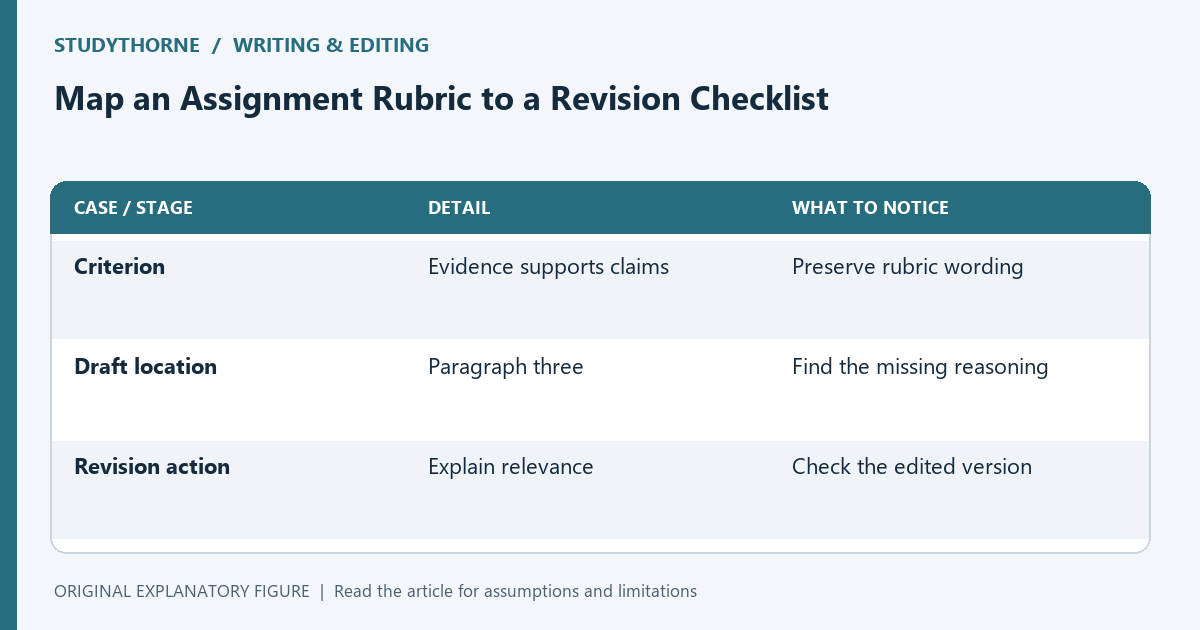
Map an Assignment Rubric to a Revision Checklist
Turn broad grading criteria into paragraph-level checks without treating a checklist as a guarantee of a grade.
Read guide →Clear, practical guides on grades, writing, citations and studying effectively — the "why" behind what our tools calculate.
Turn broad grading criteria into paragraph-level checks without treating a checklist as a guarantee of a grade.
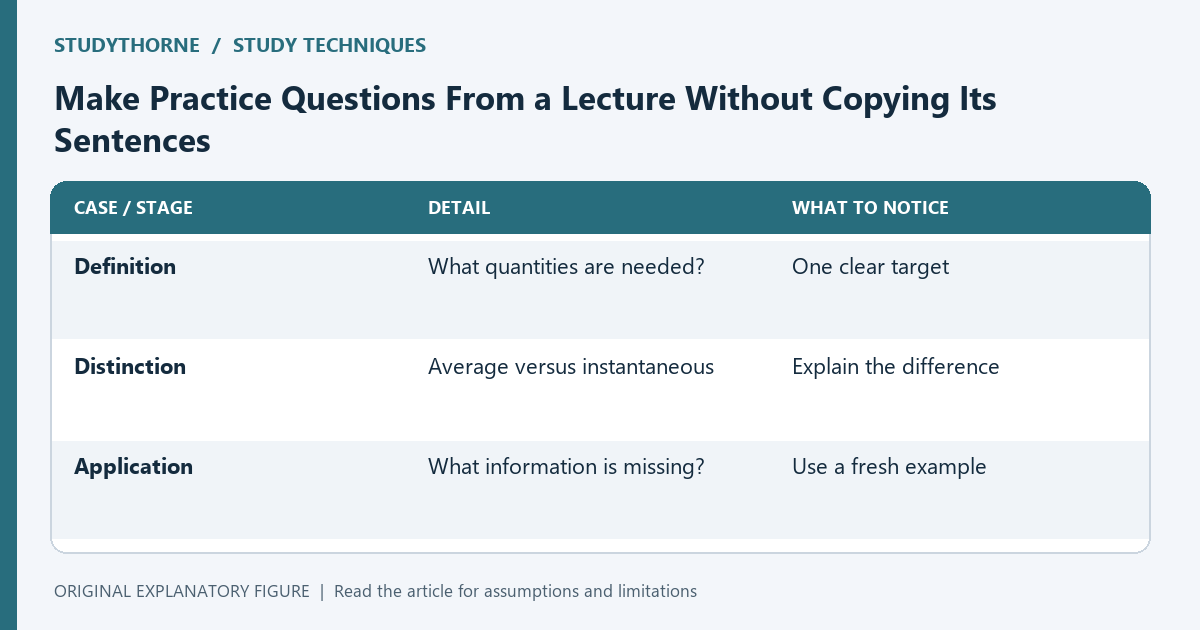
Read guide →Convert lecture ideas into answerable questions, include application prompts, and check the answers against your course material.
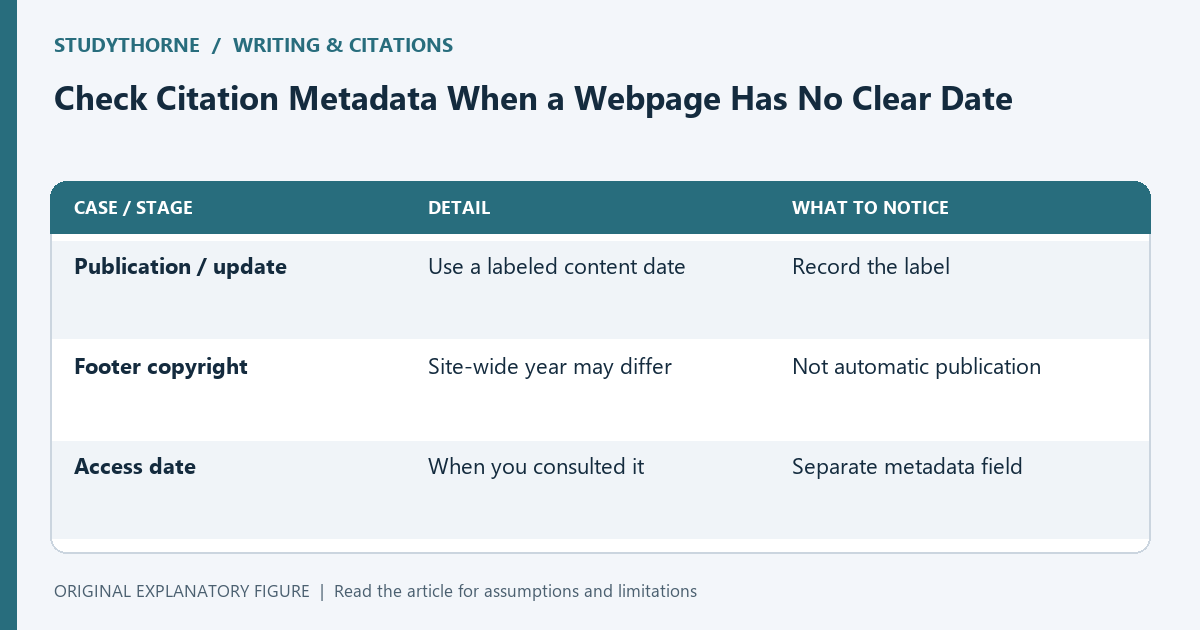
Read guide →Separate publication, update, copyright, and access dates before filling a citation generator.
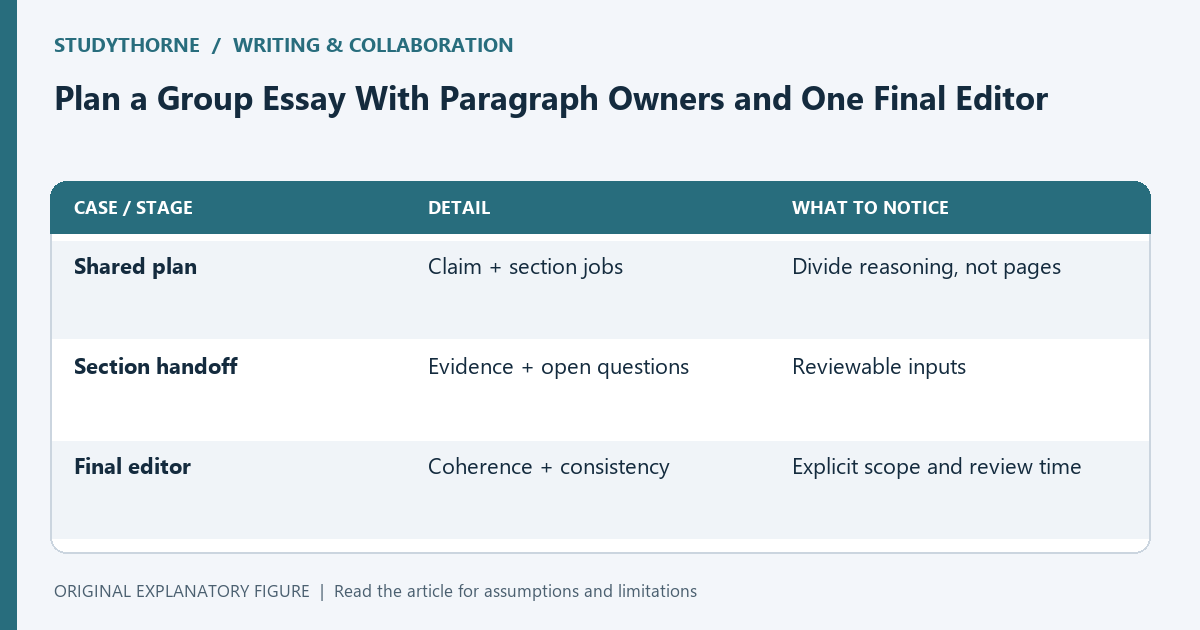
Read guide →Assign argument responsibilities, agree on source records, and leave time for a whole-draft review.
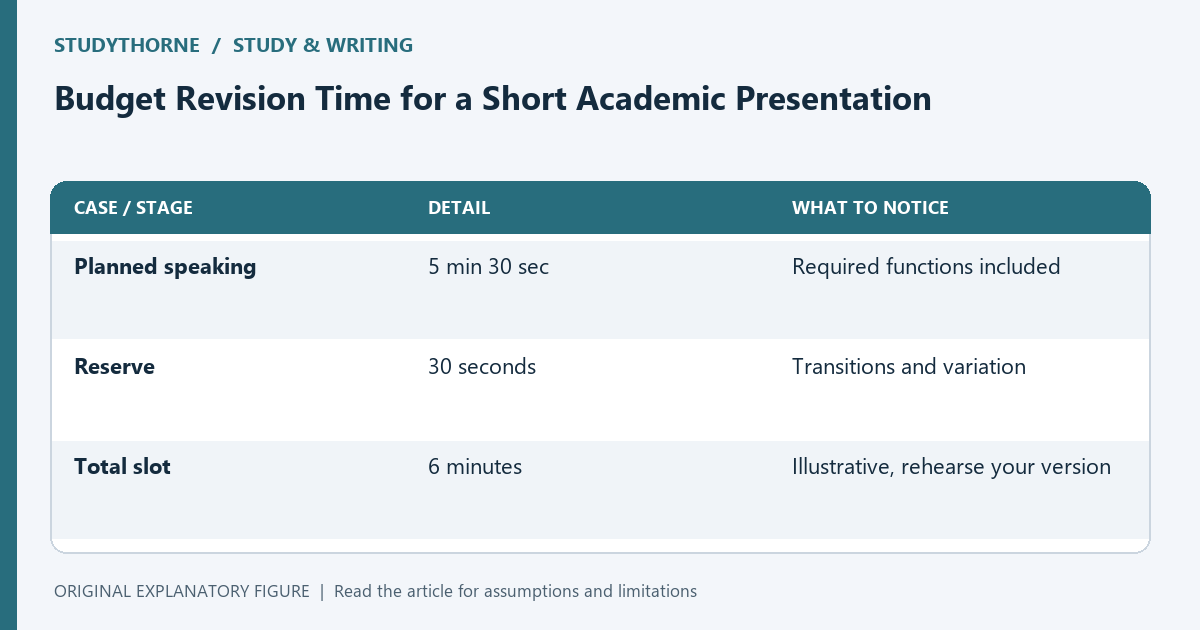
Read guide →Turn a written draft into a timed speaking plan with measured rehearsal, transition space, and a clear cut order.
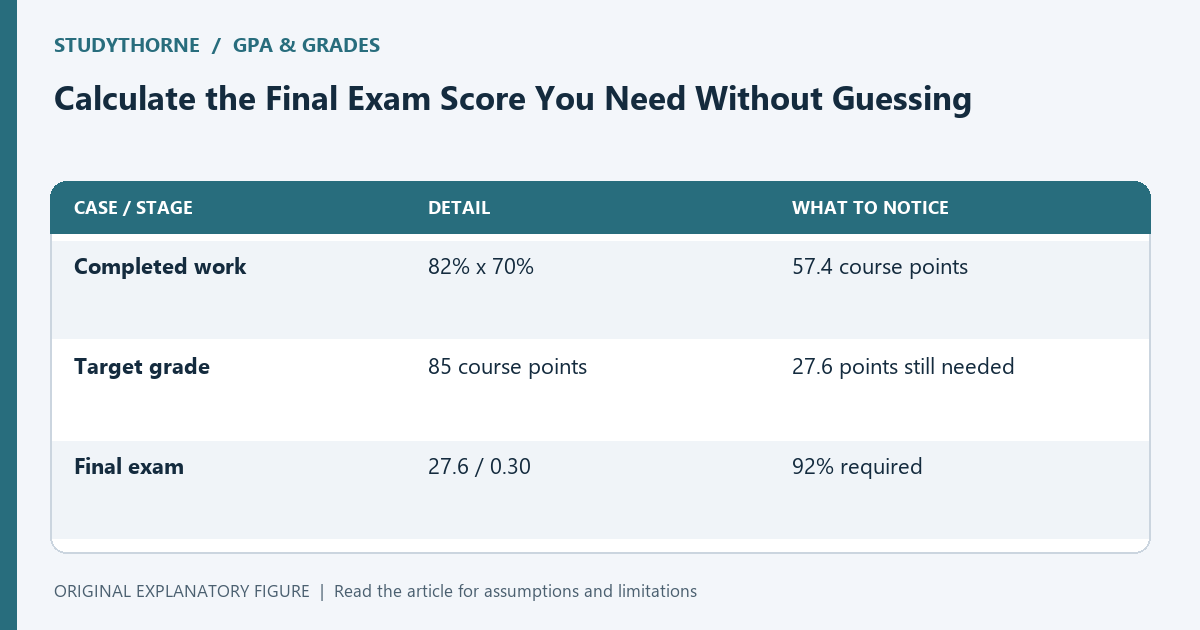
Read guide →Work backward from a weighted course target, distinguish category averages from points, and check whether the target is attainable.
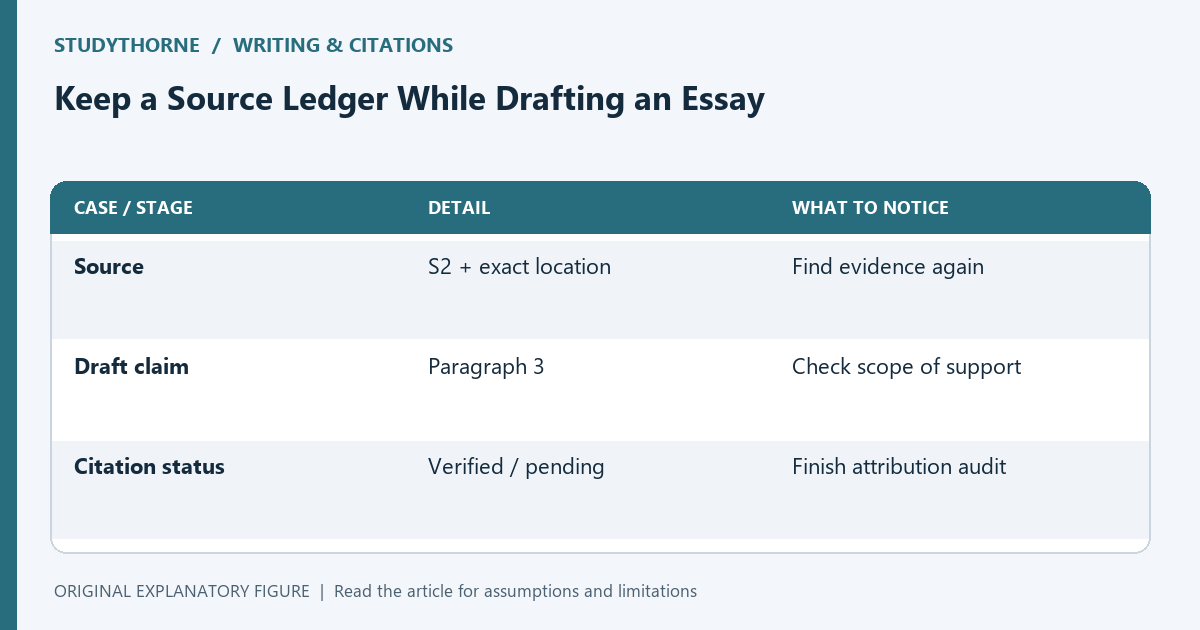
Read guide →Track claims, page locations, quotation boundaries, and citation status before a reference list becomes hard to reconstruct.
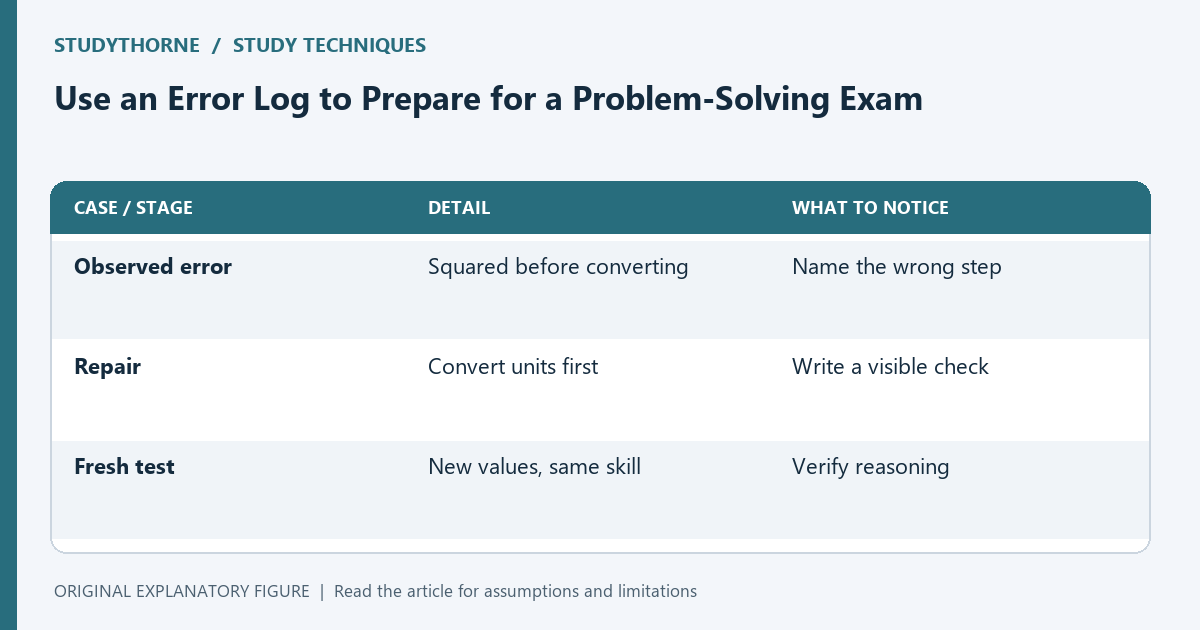
Read guide →Classify practice mistakes, choose a repair exercise, and retest without confusing remembered answers with understanding.
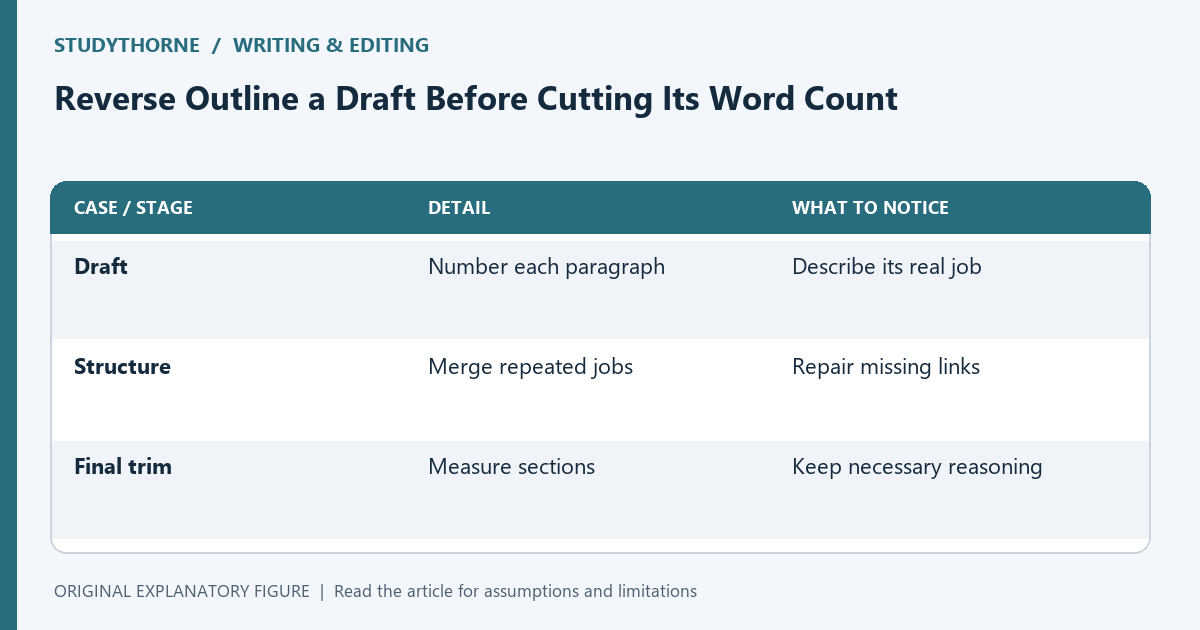
Read guide →Identify repeated paragraph jobs, missing reasoning, and weak transitions before trimming an essay sentence by sentence.
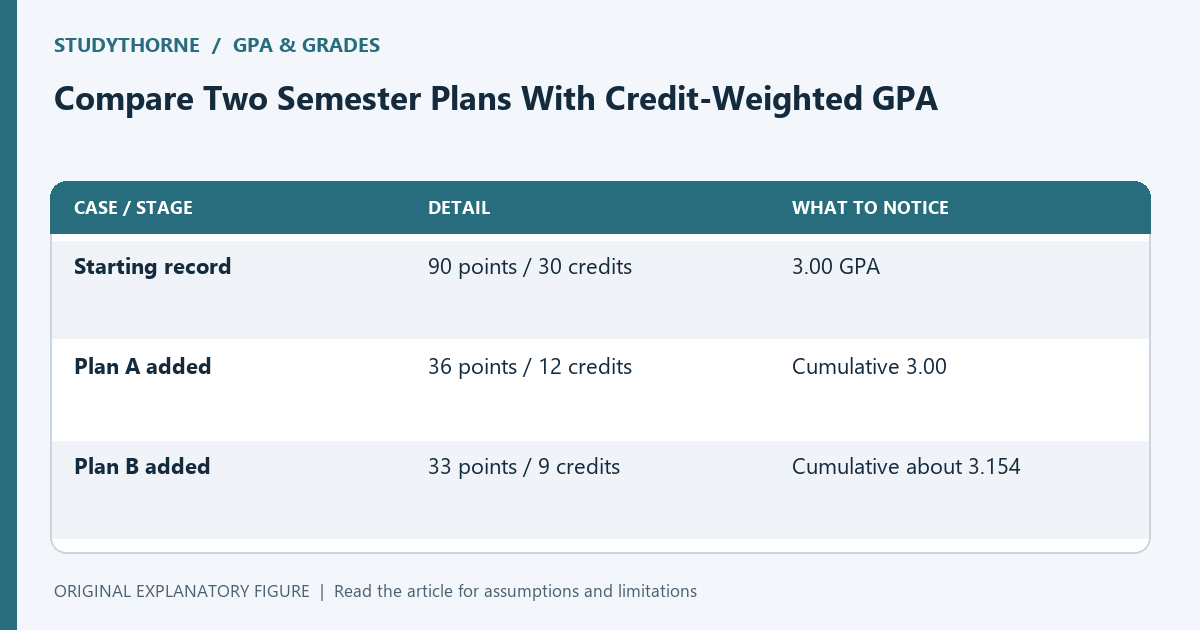
Read guide →Model a retake-free semester scenario with credit weights, quality points, and clear assumptions about institutional rules.
Read guide →GPA looks like a simple number, but the calculation behind it involves grade points, credit hours, and a weighted average most students never see spelled out.
Read more →Two students with identical grades can report different GPAs depending on whether their school uses a weighted or unweighted scale.
Read more →The standard 4.0 scale is widely used, but the exact point values for plus and minus grades vary more than most students realize.
Read more →"Good GPA" means something different depending on your goals, your school, and what you're applying for next.
Read more →Raising a GPA that's already factoring in several semesters of history takes longer than people expect — but the math behind it is predictable.
Read more →These two numbers measure genuinely different things, and confusing them leads to a lot of unnecessary GPA-related stress.
Read more →A credit hour isn't just a scheduling unit — it's the weighting factor that determines how much each course actually counts toward your GPA.
Read more →The 4.0 scale feels universal if you grew up with it, but plenty of countries grade on entirely different systems.
Read more →Page counts depend heavily on font, spacing and margins — here's how to actually estimate a word count target from a page requirement.
Read more →The same piece of text takes noticeably different amounts of time to read silently versus read aloud — here's why, and how each is estimated.
Read more →Padding is obvious to anyone grading an essay. Here's how to genuinely reach a word count target by developing ideas instead.
Read more →From a 500-word college application essay to a 10-page research paper, different assignment types come with genuinely different length norms.
Read more →Word count isn't the only structural metric that matters — sentence and paragraph length quietly shape how readable a piece of writing actually is.
Read more →Cutting words without weakening an argument is a genuine skill — here's a systematic approach rather than randomly deleting sentences.
Read more →Each major citation style has a different academic home and a genuinely different set of formatting conventions.
Read more →Website citations trip up more students than book citations, mostly because the required information isn't always clearly labeled on the page.
Read more →Most citation errors aren't about missing sources entirely — they're small formatting and consistency mistakes that add up.
Read more →Plagiarism isn't always intentional copying — understanding exactly what it covers helps you avoid accidentally crossing the line.
Read more →A complete citation actually has two parts working together — missing either one leaves the job half-finished.
Read more →Twenty-five minutes, a timer, and a short break — a deceptively simple technique with real research behind why it works.
Read more →More hours doesn't reliably mean more learning — the research on study duration points to quality and structure mattering more than raw time.
Read more →Re-reading notes feels productive, but a substantial body of research shows it's one of the least effective common study techniques.
Read more →An ambitious study schedule that collapses after three days helps less than a modest one that actually survives a real semester.
Read more →Cramming can work for a test tomorrow morning, but the research on long-term retention tells a very different story.
Read more →Procrastination is rarely about laziness — understanding what actually drives it points to more effective fixes than willpower alone.
Read more →